Ranges & Rangetops
Viking Range and Rangetop Burner Faults
Burners that will not light, ovens that drift off setpoint, and doors that no longer seal. Sealed burner and oven work on Viking ranges.
Independent Viking kitchen appliances only
Mon–Fri, 8am–6pm Sat, 9am–4pm
Sector 32207
1920s kitchens, openings narrower than the appliance, and counter circuits that were never dedicated. Fitting work first, parts work second.
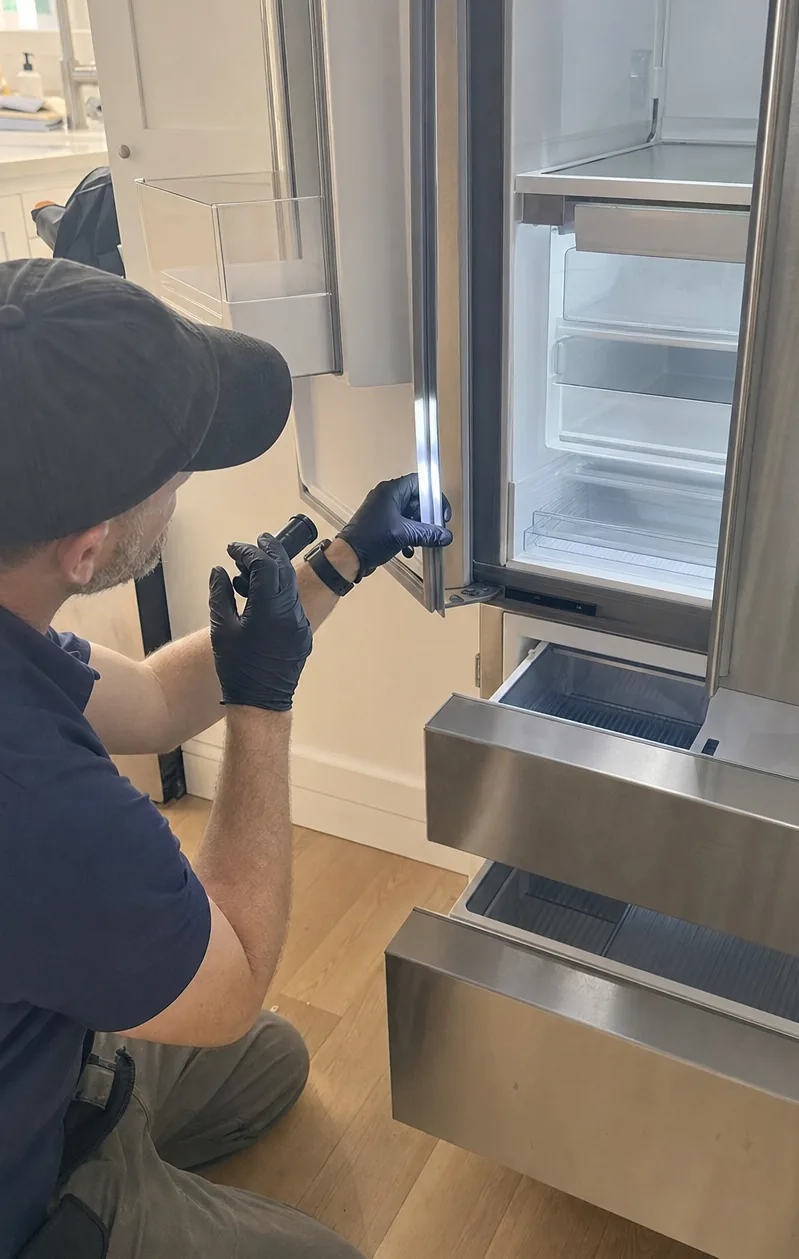
San Marco was laid out and built through the 1920s, and the housing stock still reflects it. Those kitchens were designed around the appliances of that decade: a freestanding range with a narrow footprint, an icebox, a sink, and no thought at all given to a thirty-six or forty-eight inch professional cooking suite. Nearly every serious appliance in 32207 is a retrofit into a room that was never drawn to hold it, and a good share of those retrofits were done during a renovation that was moving quickly.
Three things follow from that, and we hit all three regularly.
The opening is usually narrower than the appliance. Not by much — often an inch or two — but a heavy professional range does not persuade. Someone has to take the face frame back, and that is carpentry.
The circuit is usually wrong. Original wiring in these houses has been upgraded in layers over a century, and the layer serving the kitchen counter is often a shared branch that predates the idea of a dedicated 20-amp run. We have found whole cooking walls on a single shared circuit in this neighborhood.
The floor is usually not flat. Pine subfloor over a century-old crawl space moves. A four-hundred-pound range sitting on a floor that dips half an inch across its width will never have a square door, and no amount of hinge adjustment fixes a chassis that is being twisted by the room.
Almost every diagnosis worth trusting happens behind the appliance, and in a pre-war kitchen that is the hard part of the day. A built-in refrigerator is held by a trim kit and sits on a frame; a professional range is a few hundred pounds on levelling feet, over vinyl or tile that will mark if it is dragged. The gas connector and the electrical whip both have finite length, so a unit can often only come out far enough to work at one side of it at a time.
That is why we plan the pull before we start it. We ask on the phone whether there is a toe grille or a trim panel, whether the counter overhangs the case, what the flooring is, and whether the run to the door has a step in it. It is not small talk. It decides whether a two-hour job needs a second person, and whether the room needs protecting before anything moves.
It also changes the economics. When an appliance is this hard to reach, doing one repair and coming back in three months for the neighbouring symptom is the expensive path. If we are already behind the unit, we will look at the door closer, the levelling, the condenser and the connections at the same time and tell you what we found, whether or not you ask us to act on it today.
The wet appliances in these houses are usually the newest things in the room and the first to complain. A dishwasher that cleans the bottom rack perfectly and leaves the top rack dirty is almost never a loading problem: pull the upper spray arm, hold it to a light and count the jets you can see through. A machine whose cycle has quietly grown longer is usually being held up waiting for a water temperature it is now slow to reach.
An ice maker fails in stages rather than all at once — smaller cubes first, then a longer harvest, then a valve that will not fully seat and a sheet of ice on the freezer floor. We check the fill tube before anything else, because a partially frozen fill tube imitates the first stage exactly and costs nothing to rule out.
Access is its own consideration. Many San Marco kitchens are reached through a narrow hall from a side door, and the drive is short and shared with the street. We plan the route in before we start rather than discovering it with an appliance already off its feet.
On the first visit we measure the opening, check what the counter circuit actually is, and put a level across the floor before we say a word about parts. If the honest answer is that you need a carpenter and an electrician rather than a technician, you pay the flat diagnostic and you get that in writing, with the dimensions and the circuit requirement written down so the trades can quote it without a second visit.
If the answer is a part, you get a written estimate before anything is ordered. Genuine OEM parts, ninety days on our labor, a year on the parts we supply.
We are an independent shop working across Duval County, and we will not imply otherwise to get through a door.
What it costs in San Marco
The visit and the whole diagnostic sequence are $80 flat, and that comes off the bill the moment you approve the work. Repairs of this kind have run $240–$2,360 in parts and labor after that, and the figure on your estimate is written down before a part is ordered.
| Work | Parts and labor |
|---|---|
| $80 diagnostic | Flat, credited toward the repair |
| Refrigeration fan or defrost system | $240–$650 |
| Compressor or sealed-system repair | $1,010–$2,360 |
| Control board or touch panel | $410–$970 |
A band is where the work has landed, not a quote. You get a written estimate before any part is ordered or any tool comes out. 90 days on labor, 365 days on parts. The whole table is on the pricing page.
Asked from this sector
Related
Ranges & Rangetops
Burners that will not light, ovens that drift off setpoint, and doors that no longer seal. Sealed burner and oven work on Viking ranges.
Built-In Refrigeration
Warm boxes, iced-up evaporators, noisy condenser fans and doors that no longer pull shut. Built-in and freestanding refrigeration.
Dishwashers
Blocked spray arms, drain pumps full of glass grit, and dishes that come out chalky. Built-in dishwashers, diagnosed in the order the water travels.
Undercounter & Wine
Wine cabinets drifting off setpoint, beverage centers icing up, and undercounter ice machines skipping harvests. Small boxes in very tight spaces.
Shop Note 001
Smaller cubes first, then a slower harvest, then a valve that will not seat and a sheet of ice on the freezer floor. The order matters more than the part.
Shop Note 003
Spark, gas, path. A burner that keeps clicking without lighting is missing one of the three, and it is usually the cheapest one.
Shop Note 005
A board that died during a storm and a board that has been getting stranger for months are two different repairs. The history matters.
Shop Note 006
Two years covers the whole refrigerator, the sealed system runs longer, and the plate inside the cabinet decides which filter or part is right.
What customers said
4.3 out of 5, across 77 published customer reviews. Read every one of them.
The oven locked itself during a self-clean and stayed locked. He got the latch motor moving, explained why running that cycle on a unit this age is a gamble, and left me knowing what to avoid next time.
Alonzo F.
The hood lights kept dropping out one at a time. Corroded sockets, not the lamps, which is what I had been replacing for a year. He cleaned every contact and changed the two that were past saving.
Estelle Y.
Our wine cabinet had crept several degrees above its setting and stayed there right through the summer. He cleaned a filthy condenser, replaced the fan behind it, and it has held where we set it since.
Alaric W.
Book the visit
Viking only. Duval County, citywide. Flat $80 diagnostic. It is credited toward the repair if you approve the work.